The European Union is preparing the introduction of a digital product passport (DPP) for textile products as part of a new era of circular economy and sustainable production. The aim is to bring transparent information about the product throughout its entire life cycle – from production to recycling or reuse.
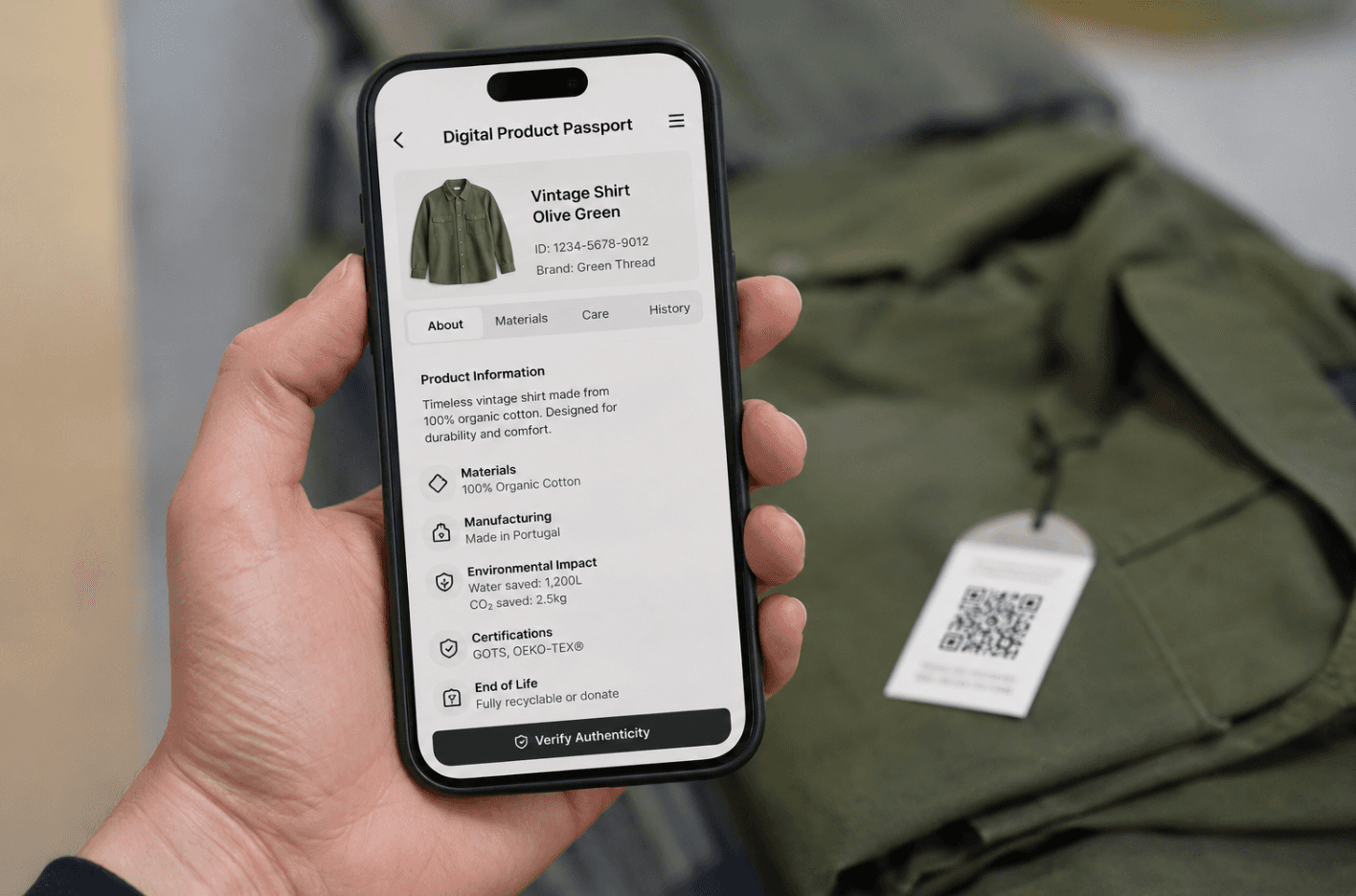
The digital passport will contain data on:
material composition,
origin and production process,
environmental impacts,
possibilities for repair, recycling, and further processing,
certifications and product sustainability.
This information will be accessible via QR codes or RFID technologies and will help not only consumers, but also manufacturers, sorting facilities, recyclers, or business partners.
One of the biggest challenges of the circular economy is the lack of reliable and shareable product data. Without high-quality information, the efficient sorting, recycling, or reuse of textiles is significantly complicated.
The digital product passport aims to address this issue by:
increasing product transparency,
simplifying material identification,
supporting textile recycling,
enabling the creation of new circular business models,
contributing to the reduction of waste and environmental burden.
For customers, the digital passport will mean easy access to information about the product's quality and origin.
The consumer will be able to verify:
material composition
environmental parameters of the product,
origin of production,
recycling or repair options.
Transparency will thus become a natural part of shopping.
According to current projections, the implementation of the digital product passport for textiles is expected in the period 2027 – 2033.
For more information about the digital passport, you can read the document from PESCO UP